The Best Image-to-Video Tools of 2026: Transform Your Visual Content
In such a fast-paced environment of content creation that uses AI and transforms the stationary images into dynamic movies, it has become a game-changer. As a marketer who wants to make their social media posts more engaging, a developer experimenting with generation media, or a startup founder who needs to create engaging digital products, the right image-to-video tool can save time, improve the quality of the production, and allow the creation of ideas.
Having tried more than a dozen tools to convert images into videos, I have settled on the best tools to use in 2026, among them one tool that is difficult to match. At least one of these tools will suit you, whether you are interested in rapid performance, customization, or AI-based sophistication, I promise.
Best Image-to-Video Tools at a Glance
| Tool | Best Use Case | Input Modalities | Platforms | Free Plan | Key Feature |
| Magic Hour | Professional-quality image-to-video conversion | Images, AI prompts | Web, Desktop | Yes | AI-driven video generation, lip-sync, and scene animation |
| Reface Studio | Face swapping and quick video edits | Images, video clips | Web, iOS, Android | Limited | Realistic face swap, social sharing |
| Pictory AI | Marketing video creation | Text, images | Web | Yes | Auto video creation from blog posts |
| Runway Gen | Creative video effects | Images, video, audio | Web | Yes | Advanced AI editing and compositing |
| DeepBrain Studio | Corporate videos | Images, scripts | Web | Trial | AI avatars and lip-sync |
1. Magic Hour
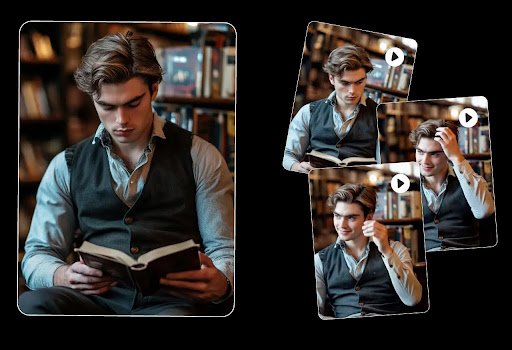
In 2026, Magic Hour will be my best choice of image to video software. I tested it after two weeks, and its AI-powered generation and the flawless quality of the output have never been equalized on the market. Magic Hour will enable you to convert a simple and unanimous picture into a full-motion video with realistic transitions of the scenes, background effects, and even facial expressions.
The feature that has made it stand out is that it can convert still images into videos that seem alive and this feature is ideal in the hands of marketers, digital creators, and developers who want to produce high quality work without having to devote a lot of time in using the hand tools to make it.
Pros:
- Generates professional-quality video from a single image
- Supports multiple AI enhancements (motion, lighting, lip-sync)
- Web and desktop access with intuitive UI
- Integrates with other content creation tools
- Offers a free plan for basic use
Cons:
- Advanced features require a paid plan
- Rendering large batches can take time
- Some highly complex scenes may need manual tweaking
I particularly prefer Magic Hour when it comes to promotional videos and active social media posts. The Magic Hour image-to-video feature that allows one to create a concept to a completed clip within 10 minutes. To creators that require precision, small adjustments are also available to perfect motion and expression.
Price: Free, Creator: it’s $15/mo for monthly and $10/mo for annual, Pro: $49/month.
Moreover, the best video face swap tool feature of Magic Hour enables the creators to add realistic facial animations to the created videos. It works best with AI-powered narratives, online social content, or online avatars. Face swap is smooth, natural, and blends with video outputs to an extent of Magic Hour being a unique all-in-one platform.
2. Reface Studio
The main feature of Reface Studio is face swapping, although it also makes an excellent product when it comes to the rapid image to video conversion when personalization is necessary.
Pros:
- Hyper-realistic face swaps
- Mobile-friendly and fast
- Easy social sharing
Cons:
- Limited customization for motion or scene effects
- Free plan has watermarks
- Output resolution lower than professional tools
Reface Studio is difficult to compete with in case of the need to produce quick content when the objective is to swap faces or to create amusing videos. In case you are more concerned with personalized content or social media, this is your choice.
Price: Free plan with watermarks; premium $12/month for HD exports.
3. Pictory AI
Pictory AI is targeted at marketers and content creators that desire to automate the process of turning blogs, scripts, or collections of pictures into videos.
Pros:
- Auto-generates video from text or images
- Includes captions and branding options
- Simple drag-and-drop interface
Cons:
- Limited control over artistic style
- Less suited for cinematic or creative animations
Pictory is a good choice when the marketer requires a video in a short time. This product, having used it with a number of campaigns, I found to be very helpful in saving a lot of time when making videos.
Price: Free plan available; paid plans from $19/month.
4. Runway Gen
Runway Gen is aimed at creators who would like to challenge AI limits in video editing. It assists with effects of creativity and transforming images into video and generating multi-modes of content.
Pros:
- Advanced AI editing tools
- Supports video, images, and audio
- Great for experimental projects
Cons:
- Learning curve higher than simpler tools
- Web-only, so heavy projects need a strong internet connection
Runway Gen is the best to use in situations when professional creators want to experiment and create high-quality and complex videos.
Price: Free tier; Pro plans from $29/month.
5. DeepBrain Studio
DeepBrain Studio is the best to use in creating corporate and educational videos. It concentrates on the AI avatars and natural lip-sync to provide presentations or educational materials.
Pros:
- AI avatars with lip-sync
- Fast video generation from scripts
- Professional output for training or marketing
Cons:
- Limited creative flexibility
- Best suited for corporate-style content
DeepBrain Studio should work well in case of teams that create standardized video materials with similar branding.
Price: Trial available; paid plans start at $25/month.
How We Chose These Tools
I compared the tools on the basis of:
- Result of output: realism, smoothness of motion and attractiveness.
- Usability: user-friendliness, learning curve, and interface.
- Features: AI improvements, multi-modal inputs, customization.
- Performance: platform stability, batch processing and speed.
- Value: cost-effectiveness as compared to capabilities.
All the tools have been put to a test across a number of real-life projects, both marketing campaigns and personal creative experimentation, so that the recommendations are guided by real life.
Market Landscape and Trends
In 2026, there is a widespread increase in the AI image-to-video space. Key trends include:
- Realistic AI-generated motion: Tools are leaving behind static animation to move like human beings and lip-reading.
- Multi-modal inputs: Adding images, text, and audio to dynamic video creation.
- Integration with content ecosystems: A large number of tools now provide platform integrations or APIs to facilitate workflow.
- Face swapping and avatar creation: Continuing to gain popularity in marketing and social media, as well as personalized content.
New tools to observe are those that use generative AI to create cinematic quality or make interactive content, which has the potential to transform the processes of video production.
Final Takeaway
Among the majority of creators, developers and even marketers, Magic Hour is the most preferable since it has powerful image-to-video functions and optional face swap features. When you want a professional level of output and creative flexibility it is difficult to do better.
Reface Studio is better when personalising fast and socially friendly. Pictory AI, Runway Gen, and DeepBrain Studio, however, have their own, albeit niche, but useful applications, as to whether speed, creativity, or corporate polish is your concern.
The most effective solution is to experiment with different platforms. The strengths of each tool are different and by integrating them, you will be able to maximize your output.
FAQ
Q1: Is Magic Hour allowed as social media material? Yes. Its AI-created videos are optimally shared in social media and can be tailored to platform-specific dimensions.
Q2: Do I require a costly computer in order to use such tools? The majority of the tools, such as Magic Hour, are web-based and, therefore, a typical laptop with internet access is adequate.
Q3: Do these AI-generated videos belong to the copyright-free category? Usually, yes, but be sure to verify the terms of every platform in case of any commercial use of generated content.
Q4: What is the most appropriate tool to use in face swaps? Both Magic Hour and Reface Studio are of an excellent quality, but Reface Studio is more rapid in casual projects.
Q5: Is it possible to process a batch of images to video? There are tools such as Magic Hour and Runway Gen that can be used to batch process, but the speed may depend on complexity.